Cannabinoids and history: Development over time
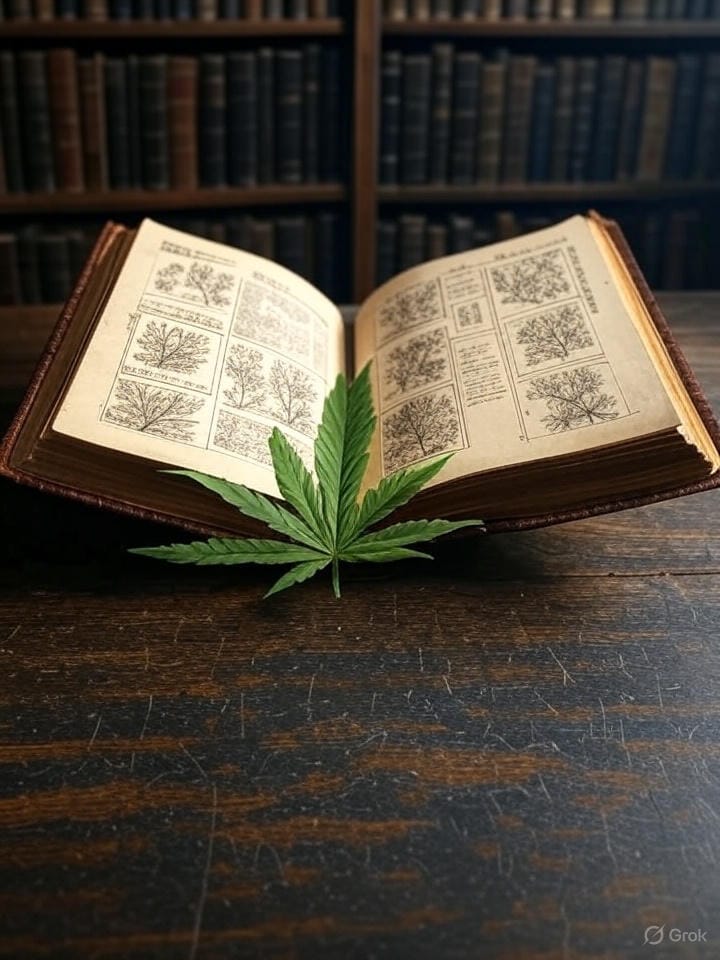
Cannabinoids, chemical compounds found in the Cannabis sativa plant, have played a fascinating role in human history. From their use in spiritual rituals in ancient times to their relevance in modern medicine, these compounds have been intertwined with the cultural, scientific and medical development of various civilizations. In this blog post, we will explore the history of cannabinoids, their impact on different cultures and the scientific advances that have led to an understanding of their therapeutic potential, backed by scientific references that highlight their importance.
Ancestral Origins of Cannabis
The use of cannabis dates back thousands of years. The earliest archaeological records suggest that the cannabis plant, which originated in Central Asia, was used by ancient cultures for both its psychoactive properties and practical applications. In China, around 2700 BC, the emperor Shen Nung, known as the father of Chinese medicine, documented the use of cannabis in the treatise Shennong Bencaojing to treat various ailments, such as rheumatic pain, gout and malaria (Li, 1974).
In India, cannabis has a long tradition in religious texts such as the Vedas (1500-1000 BC), where it is known as bhang, a sacred plant associated with the god Shiva. It was used in spiritual rituals and as Ayurvedic medicine to relieve pain and anxiety (Russo, 2007). In ancient Egypt, there is evidence of its use in medical contexts, as described in the Ebers Papyrus (circa 1550 BC), which mentions cannabis to treat inflammation (Russo, 2007).
Practical Uses of Cannabis
In addition to its medicinal and spiritual applications, cannabis played an important role as an industrial material. The plant’s fibers, known as hemp, were used to make rope, textiles and paper. In ancient China, hemp fabrics were produced that were so fine they rivaled silk (Clarke & Merlin, 2013). During the Middle Ages, hemp was a key resource in Europe for the manufacture of ship sails and ropes, contributing to the rise of maritime exploration.
Cannabinoids in Ancient and Medieval Medicine
Over the centuries, cannabis was integrated into the medicinal practices of various cultures. In the medieval Islamic world, physicians such as Avicenna (Ibn Sina) recommended cannabis in his work The Canon of Medicine (11th century) to treat pain, epilepsy and digestive disorders (Lozano, 2001). However, its recreational and spiritual use also generated controversy, especially in regions where religious authorities imposed restrictions.
In Europe, cannabis was less prominent until the 19th century, when Irish physician William O’Shaughnessy introduced its use into Western medicine after studying its applications in India. O’Shaughnessy published a study detailing the effects of cannabis in the treatment of muscle spasms, rheumatism and tetanus in 1839, which marked a turning point in its scientific acceptance (O’Shaughnessy, 1839).
Discovery of Cannabinoids and the Endocannabinoid System
Scientific interest in cannabinoids intensified in the 20th century with the isolation of the first active compounds. In 1964, Israeli chemist Raphael Mechoulam identified and isolated delta-9-tetrahydrocannabinol (THC), the main psychoactive compound in cannabis (Mechoulam & Gaoni, 1964). This discovery was followed by the identification of cannabidiol (CBD), a non-psychoactive compound with therapeutic properties, in the same decade.
An even more significant breakthrough occurred in the 1990s, when the endocannabinoid system (ECS), a biological system present in all mammals that regulates functions such as sleep, appetite, pain and immune response, was discovered. The SEC is composed of receptors (CB1 and CB2), endocannabinoids (such as anandamide) and metabolic enzymes (Devane et al., 1992). This discovery revolutionized the understanding of how cannabinoids interact with the human body and opened the door to new research on their therapeutic potential.
Cannabinoids in Modern Medicine
In recent decades, cannabinoids have gained prominence in modern medicine. Studies have shown that CBD can be effective in the treatment of drug-resistant epilepsy, such as Dravet syndrome and Lennox-Gastaut syndrome (Devinsky et al., 2017). In addition, THC and other cannabinoids have shown benefits in the management of chronic pain, chemotherapy-induced nausea, and spasticity in patients with multiple sclerosis (Whiting et al., 2015).
However, the medical use of cannabis is not without controversy. Variability in international regulations, potential side effects, and the need for more clinical studies have generated debates about its safety and efficacy. For example, a 2015 meta-analysis found that, although cannabinoids show promise, data on their long-term safety are limited (Whiting et al., 2015).
Cultural and Legal Impact in the 21st Century
The 21st century has witnessed a significant change in the perception of cannabis. Countries such as Canada, Uruguay and several U.S. states have legalized its recreational and medicinal use, driven by growing public acceptance and scientific evidence. However, in other regions, such as parts of Asia and the Middle East, cannabis remains strictly prohibited due to social and cultural concerns.
The stigma associated with cannabis, largely originated by 20th century prohibition campaigns such as the “War on Drugs” in the USA, is diminishing. Nevertheless, the scientific community emphasizes the need for a balanced approach that combines therapeutic benefits with adequate regulation to minimize risks, especially in vulnerable populations such as adolescents (Volkow et al., 2014).
Conclusion
Cannabinoids and cannabis have come a long way from their use in ancient rituals to their role in modern medicine. Their history reflects the interplay between science, culture and politics, showing how one plant can influence humanity in diverse and profound ways. As research progresses, cannabinoids are likely to continue to unlock new secrets, cementing their place in the history of science and medicine.
References
- Clarke, R. C., & Merlin, M. D. (2013). Cannabis: Evolution and Ethnobotany. University of California Press. .
- Devane, W. A., et al. (1992). Isolation and structure of a brain constituent that binds to the cannabinoid receptor. Science , 258(5090), 1946-1949.
- Devinsky, O., et al. (2017). Trial of Cannabidiol for Drug-Resistant Seizures in the Dravet Syndrome. New England Journal of Medicine , 376(21), 2011-2020.
- Li, H. L. (1974). An archaeological and historical account of cannabis in China. Economic Botany , 28(4), 437-448.
- Lozano, I. (2001). The therapeutic use of cannabis in Arabic medicine. Journal of Cannabis Therapeutics , 1(1), 63-71.
- Mechoulam, R., & Gaoni, Y. (1964). A total synthesis of dl-Δ9-tetrahydrocannabinol, the active constituent of hashish. Journal of the American Chemical Society , 86(8), 1646-1647.
- O’Shaughnessy, W. B. (1839). On the preparations of the Indian hemp, or gunjah. Provincial Medical Journal and Retrospect of the Medical Sciences , 8, 401-413.
- Russo, E. B. (2007). History of cannabis and its preparations in saga, science, and sobriquet. Chemistry & Biodiversity , 4(8), 1614-1648.
- Volkow, N. D., et al. (2014). Adverse health effects of marijuana use. New England Journal of Medicine, 370(23), 2219-2227.
- Whiting, P. F., et al. (2015). Cannabinoids for medical use: A systematic review and meta-analysis. JAMA , 313(24), 2456-2473.